If you have been scrolling through travel forums trying to figure out whether Chacahua is worth visiting, you are not alone. This tiny stretch of the Oaxacan coast does not show up in most guidebooks, and the information that does exist online can be contradictory. Some travelers call it paradise. Others warn you to skip it entirely. The truth, as usual, sits somewhere in between — and depends almost entirely on what kind of traveler you are.
We have spent years getting to know this coastline while building Montserrat Reserve, our eco retreat near Chacahua. This guide is our honest attempt to help you decide whether the trip makes sense for you.
What Chacahua Actually Is
Before you can decide if Chacahua is worth visiting, it helps to understand what you are actually visiting. Chacahua is not a resort town. It is not a surf destination with beach bars and taco stands on every corner (that would be Puerto Escondido, about two hours east). It is not even a single place in the traditional sense.
Chacahua refers to a few things at once. There is the Lagunas de Chacahua National Park, a protected area established in 1937 that covers roughly 14,000 hectares of lagoons, mangroves, tropical dry forest, and coastline. Within the park sits the village of Chacahua itself — a small fishing community of a few hundred people, reachable primarily by boat across the lagoon. And then there is the lagoon system, a network of brackish waterways connecting the ocean to inland marshes, home to crocodiles, hundreds of bird species, and one of Mexico’s most impressive bioluminescent displays.
The village has a handful of basic accommodations, a few restaurants serving fresh seafood, and a long, mostly empty beach that stretches for kilometers in both directions. There is no bank. There is no pharmacy worth mentioning. The closest proper town is Zapotalito, where the boats launch, and even that is modest by any standard.
This is a place defined by what it lacks as much as by what it offers. And that is precisely the point.
Who Chacahua Is Perfect For
Nature Lovers and Birders
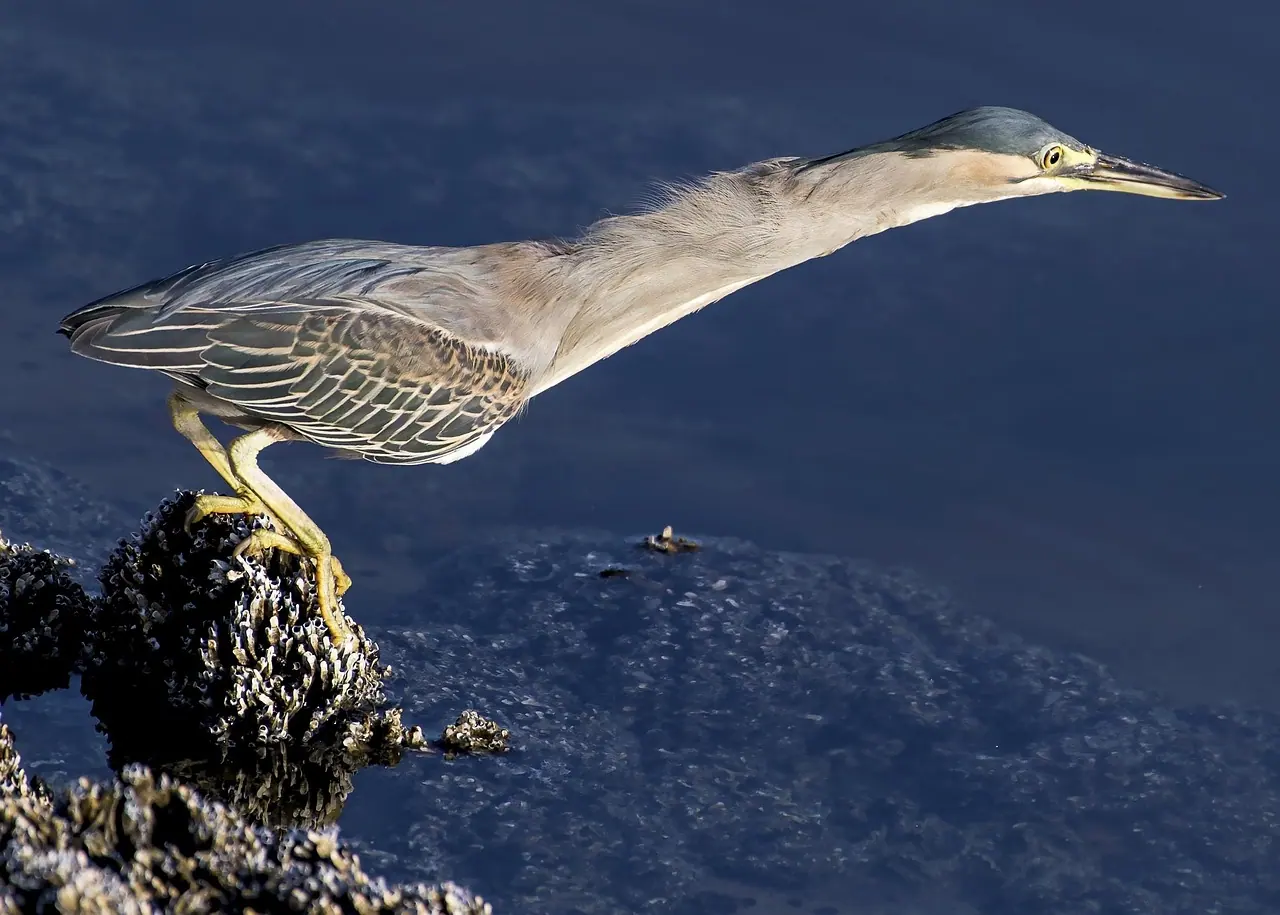
If you travel to see wildlife rather than nightlife, Chacahua will not disappoint. The national park is home to over 200 bird species, including roseate spoonbills, wood storks, white ibis, and several species of heron. During the winter months (November through March), migratory birds swell those numbers further. The mangrove channels are a quiet, sheltered world where you can paddle a kayak for hours without seeing another person.
Crocodiles sun themselves along the lagoon banks. Sea turtles nest on the beaches between July and December. If you visit during the right moon phase, the bioluminescent plankton in the lagoon light up the water beneath your boat like a submerged galaxy. It is one of the most surreal natural experiences available in Mexico, and most people have never heard of it.
Couples Looking to Disconnect
Chacahua is one of the last places on the Oaxacan coast where you can genuinely unplug. Not in the Instagram-wellness-retreat sense of the word, where you put your phone in a basket for a yoga class and pick it up an hour later. Here, unreliable cell signal and limited electricity make disconnection less of a choice and more of a reality.
For couples who want to spend a few days doing nothing but reading in a hammock, swimming in warm water, eating grilled fish, and watching the sun drop into the Pacific, this is difficult to beat. The pace is slow by design. There are no schedules, no line at the restaurant, no competition for beach space. Just time and quiet.
If you are looking for this kind of experience in a more structured setting, an eco retreat near the lagoon can offer the same sense of isolation with a few more comforts.
Eco-Conscious Travelers
Chacahua’s remoteness has preserved it in ways that more accessible destinations have lost. The national park status provides a baseline of protection, but it is the sheer difficulty of getting here that has done the most to keep the coastline intact. There are no high-rises. No jet skis. No all-inclusive resorts dumping wastewater into the ocean.
If you care about supporting communities that are trying to develop tourism sustainably rather than exploitatively, Chacahua is a place where your travel dollars go directly to local families. Boat captains, cooks, guesthouse owners — these are residents, not franchise operators. The tourism economy here is small and personal in a way that has largely vanished from more popular Mexican beach towns.
Surfers (With the Right Expectations)
The beach break at Chacahua can be fun, particularly for intermediate surfers who do not need perfect conditions. The waves are not world-class, but they are consistent during the summer swell season (May through October) and you will likely have the lineup to yourself. Do not come expecting Puerto Escondido power — this is a mellower wave in a mellower place.
Who Should Probably Skip Chacahua
Honesty matters here more than enthusiasm. Chacahua is not for everyone, and there is no shame in recognizing that.
Party Seekers and Nightlife Lovers
If your ideal beach trip involves dancing until 2 AM, bar-hopping, and meeting dozens of other travelers, Chacahua will bore you within 24 hours. The village has a couple of spots where you can get a beer, but there is no nightlife. The loudest sound after dark is the ocean. If that sounds like a nightmare rather than a dream, save yourself the boat ride.
Luxury Hotel Travelers
If you need air conditioning, hot water on demand, room service, and a concierge, Chacahua will frustrate you. Most accommodations are basic — some charmingly so, others just basic. Electricity can be intermittent. Hot water is not guaranteed everywhere. Beds may be firm. Walls may be thin. This is not a five-star destination, and pretending otherwise would be dishonest.
That said, a few properties in the broader Chacahua area are raising the bar on comfort without sacrificing the character of the place. Eco-friendly construction, solar power, and thoughtful design can go a long way toward making remoteness feel intentional rather than inconvenient.
Anyone Who Needs Reliable Wi-Fi
If you are a remote worker who absolutely must be on Zoom calls, or if you cannot go 48 hours without streaming something, Chacahua will test your patience. Cell signal ranges from weak to nonexistent depending on your carrier and the weather. Some places have satellite internet, but speeds are unpredictable. Plan accordingly: download your books, your playlists, and your maps before you arrive.
Travelers With Mobility Challenges
This is a practical concern worth mentioning. Getting to Chacahua involves boarding a small motorboat (a lancha), stepping onto uneven sand, and walking unpaved paths. The village lacks paved roads and wheelchair-accessible infrastructure. If you or a travel companion has limited mobility, the logistics can be genuinely difficult. This is not a judgment — it is a reality of the infrastructure.
The Realities You Should Know Before Going
Getting There Takes Effort
The most common route is flying into Puerto Escondido (PXM), then taking a shared taxi or colectivo west to Zapotalito (about 1.5 to 2 hours depending on road conditions). From Zapotalito, you board a lancha for a 30 to 45 minute boat ride across the lagoon. The boat ride is part of the experience — you pass through mangrove tunnels with birds exploding out of the canopy — but it does mean you cannot just show up whenever you want. Boats typically run during daylight hours.
Cash Is King
There are no ATMs in Chacahua. The nearest reliable one is in Puerto Escondido. Bring enough pesos to cover your entire stay, plus a buffer. Most places do not accept cards. A few might take a transfer via Mexican banking apps, but do not count on it.
Electricity Is Limited
Many places in the village run on solar panels, generators, or a combination. This means electricity may only be available during certain hours. Charging your phone is generally possible, but running a hair dryer might not be. Adjust your expectations accordingly.
Food Is Simple and Excellent
You will eat fresh fish, shrimp, and seafood prepared simply — grilled, fried, or cooked in garlic. Expect rice, beans, tortillas, and fresh salsa. Vegetarian options exist but are limited. If you have complex dietary restrictions, bring supplementary food. The quality of what is available, though, is genuinely good. Fish that was in the ocean that morning, served with a cold beer on a plastic table overlooking the waves — it is hard to argue with that.
Is Chacahua Worth Visiting? Best Time to Go
Timing matters. The best time to visit Chacahua depends on what you want to see and how much heat you can tolerate.
November through February is the most comfortable season. Temperatures are warm but not brutal (mid-20s to low 30s Celsius), humidity is manageable, and the skies are reliably clear. This is also peak season for migratory birds and turtle nesting (the tail end of it, at least). The bioluminescence tends to be strongest during new moon phases in these drier months.
March through May gets progressively hotter and more humid. April and May can be scorching. The upside is fewer visitors and lower prices.
June through October is rainy season. Afternoon downpours are common, the lagoon swells, and some paths can flood. But the landscape is at its greenest, the surf picks up, and the rains usually pass quickly. Mosquitoes are more aggressive during these months — bring repellent.
How Long to Stay in Chacahua
This is one of the most common questions, and the answer depends on your tolerance for simplicity.
Two nights is the minimum to make the trip worthwhile. One day will feel rushed after the effort of getting there. With two nights, you can explore the beach, take a lagoon tour, see the bioluminescence (weather permitting), and have enough downtime to actually relax.
Three to four nights is the sweet spot for most travelers. This gives you time to settle into the rhythm of the place, take a mangrove kayaking trip, watch the sunrise without an alarm, and let the stress of your regular life actually start to dissolve. By the third day, you stop checking your phone out of habit — partly because there is no signal, partly because you stop caring.
Five or more nights is for people who genuinely love solitude, are working on a creative project, or simply have nowhere else to be. The village is small enough that you will know the dogs by name after a week. Some people find this meditative. Others find it claustrophobic. Know yourself.
If you are considering a longer stay, having a comfortable base makes all the difference. A well-designed eco retreat with solar power, good beds, and a kitchen can turn an extended visit from an endurance test into a genuine restoration.
The Magic That Makes It Worth It
After all the caveats and warnings, here is the part that keeps drawing people back — and the reason we chose this stretch of coast to build on.
The bioluminescent lagoon at night is unlike anything most people have ever seen. You trail your hand through black water and it lights up in electric blue, as if the stars sank into the ocean and dissolved. It is not a gimmick or a light show. It is millions of dinoflagellates responding to movement, and it makes you feel like you have stumbled into a place that should not quite exist.
The beaches are wide, golden, and usually empty. Not quiet-for-Mexico empty. Empty empty. You can walk for an hour and see nobody but pelicans and the occasional fisherman. The sand is soft. The water is warm. The sunsets are the kind that make you stop talking mid-sentence.
The mangrove forests are dense, green, and alive with sound — birds calling, water lapping against roots, the occasional splash of something you cannot see. Paddling through them in a kayak is one of the most peaceful activities available on the entire Oaxacan coast.
And then there are the stars. Without light pollution, the night sky over Chacahua is staggering. The Milky Way is not a faint smudge — it is a bright, textured band stretching from horizon to horizon. You lie in a hammock and look up and remember, with some embarrassment, that you had forgotten the sky could look like this.
The Honest Answer
Is Chacahua worth visiting? If you are the kind of traveler who finds beauty in simplicity, who values quiet over convenience, and who does not need a cocktail menu to enjoy a beach — yes. Absolutely. It is one of the most special places on the Mexican coast, and its obscurity is part of what protects it.
If you need comfort, connectivity, and entertainment, you will be happier somewhere else, and that is perfectly fine.
The right question is not really whether Chacahua is worth visiting. It is whether Chacahua is worth visiting for you. And only you can answer that.