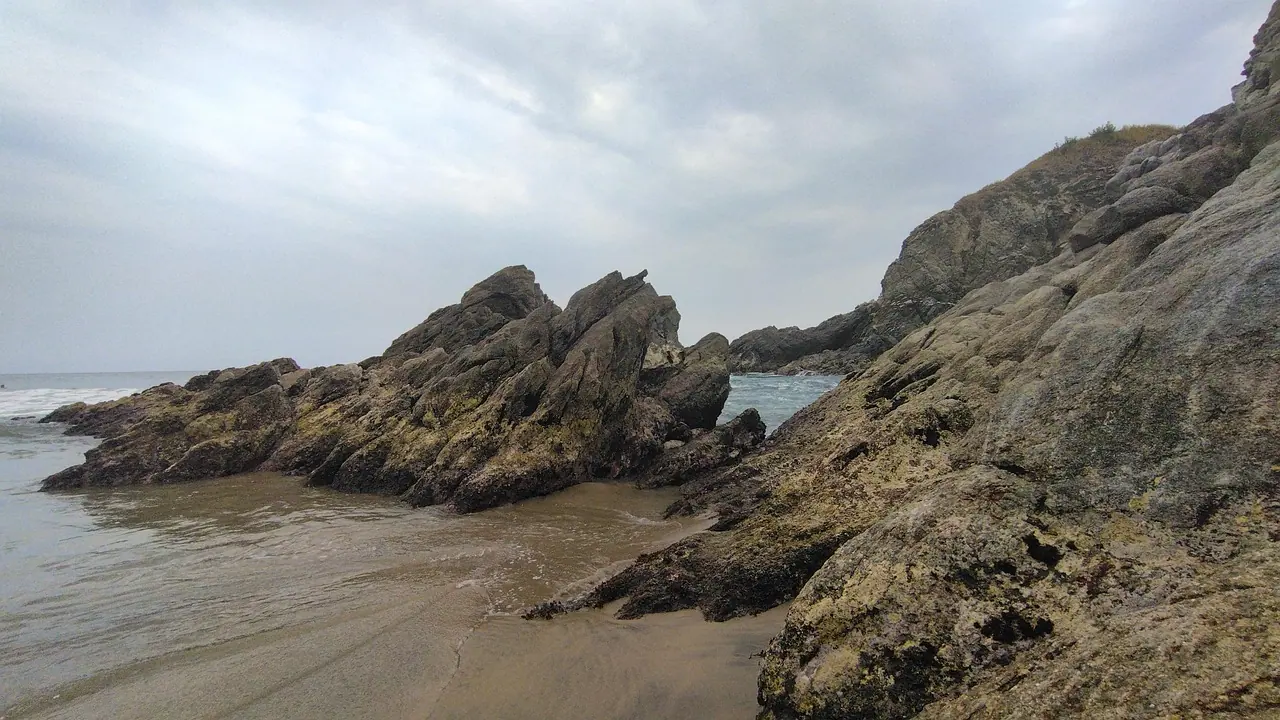
If you’re looking beyond Puerto Escondido for something quieter on the Oaxacan coast, you’ve likely stumbled into the Mazunte vs Chacahua debate. Both towns attract travelers who want less noise, more nature, and a slower pace of life than what the bigger beach hubs deliver. But despite sitting on the same Pacific coastline, Mazunte and Chacahua are genuinely different experiences — in accessibility, infrastructure, energy, and how far they take you from the familiar.
Mazunte is the one more people have heard of. It has earned a reputation as a wellness and yoga destination with a developed community of small businesses, hilltop cabanas, and one of the most famous sunset viewpoints in Mexico. Chacahua is the one that’s harder to explain until you’ve been there — a lagoon village inside a national park, reachable only by boat, where electricity comes from solar panels and the night sky is the main event.
This guide compares them honestly across every category that matters — vibe, beaches, accommodation, food, activities, logistics, cost, and connectivity — so you can decide which one fits what you’re actually looking for.
Mazunte vs Chacahua: The Vibe
Mazunte
Mazunte sits on a hillside above a crescent bay, roughly 70 kilometers west of Puerto Escondido. It was once a turtle-hunting village. After the slaughterhouse closed in the early 1990s, the town gradually reinvented itself around conservation and alternative tourism. Today it’s a well-established but still small community where yoga shalas, cacao ceremonies, vegetarian cafes, and mezcal bars coexist with local families who’ve been here for generations.
The atmosphere is spiritual without being overwhelming about it. You’ll find sound healing sessions advertised on hand-painted signs and artisanal chocolate shops next to taco stands. There’s a social scene — Mazunte draws a mix of long-stay yogis, backpackers, digital nomads, and traveling couples — but it’s low-key compared to Puerto Escondido. The town’s rhythm is shaped by the wellness culture that has grown around it over the past two decades. You can be as social or as solitary as you want, but you won’t feel truly isolated here.
Chacahua
Chacahua exists on a different register entirely. To reach the village, you first drive to the small port of Zapotalito, then board a motorboat that cuts through the mangrove-lined channels of the Lagunas de Chacahua National Park. There’s no road in. The boat ride through the lagoon system isn’t just transportation — it’s the first signal that you’re entering a place that operates by different rules.
The village itself is small, sandy, and unhurried. There are no yoga studios, no branded anything, no scene to plug into. Dogs sleep in the shade of fishing boats. Children play on the lagoon shore. The sound of a generator kicking on feels like an event. The vibe isn’t curated or intentional in the way Mazunte’s is — it’s simply what happens when a community exists at the end of a boat ride, surrounded by mangroves, lagoons, and open ocean.
If Mazunte is a place where people come to find themselves, Chacahua is a place where people come to lose the need to look.
Mazunte vs Chacahua: Beaches
Mazunte
Mazunte’s main beach is a sheltered bay with calm, swimmable water — one of the gentler spots on this stretch of coast. The sand is golden, the bay is walkable end to end, and on calm days the water is clear enough for snorkeling near the rocks. Just west, San Agustinillo offers another beautiful beach with slightly more wave energy, popular with body surfers and beginning board surfers.
The crown jewel is Punta Cometa, a rocky headland that juts into the Pacific at the westernmost point of mainland Oaxacan coast. The sunset from Punta Cometa is legendary — the kind of thing that ends up defining a trip. The hike up takes about 20 minutes from town and the view is genuinely stunning, with whales visible during season (December through March).
Chacahua
Chacahua’s outer beach — Playa Chacahua — is a long, raw stretch of open Pacific coastline. The waves are powerful and consistent, suited to intermediate and advanced surfers. The beach is often nearly empty. On a weekday outside of holiday periods, you might see five people on a kilometer of sand. There is no beach club, no umbrella rental, no vendor walking up to sell you anything.
But the beaches only tell half the story. The lagoon system is the defining natural feature — warm, calm, tidal waters threading through mangrove forests, home to crocodiles, herons, egrets, roseate spoonbills, and bioluminescent plankton that turn the water into electric blue light on moonless nights. Chacahua’s waterfront experience is split between the raw Pacific and this protected, almost primordial lagoon network.
Accommodation: Hillside Retreats vs Off-Grid Cabanas
| Feature | Mazunte | Chacahua |
|---|---|---|
| Style | Hillside cabanas, boutique hotels, hostels | Basic cabanas, eco retreats |
| Price range (per night) | $15–$200 USD | $10–$150 USD |
| Air conditioning | Some places — fans more common | Rare — fans and natural ventilation |
| Wi-Fi | Available in most places; moderate speed | Limited or nonexistent |
| Hot water | Common but not universal | Not guaranteed |
| Booking platforms | Airbnb, Booking.com, Hostelworld | Some Airbnb; many book direct |
| Electricity | 24/7 grid power | Solar/generator; limited hours |
| Yoga/wellness on-site | Very common | Rare |
Mazunte
Mazunte has a solid range of accommodation, from dorm-style hostels near the beach to hillside boutique cabanas with hammocks and ocean views. Many places are built into the forested hillside behind town, offering privacy, breeze, and the sound of cicadas and birds in every direction. Mid-range options in the $50–$120 range often include yoga decks, communal kitchens, and lush gardens. A few higher-end spots have pools and more polished design.
The infrastructure is there. You’ll generally have Wi-Fi (workable but not blazing), hot water, and regular electricity. The accommodation leans rustic-charming rather than resort-polished, which suits the town’s character.
Chacahua
Accommodation in Chacahua is simpler by necessity and by philosophy. Most places offer palm-roofed cabanas with mosquito nets, basic beds, and composting or shared bathrooms. A few properties have raised the standard in recent years, offering private rooms with better mattresses, solar-powered fans, and genuinely thoughtful design — proof that off-grid living doesn’t have to mean uncomfortable.
Montserrat Reserve is a good example of this shift. It brings intentional architecture, natural swimming pools, and organic gardens to a setting that remains fully off-grid and immersed in the surrounding landscape. The goal isn’t to import luxury into the jungle but to build comfort that works with the environment rather than against it.
If you need reliable Wi-Fi, hot showers on demand, and the ability to charge three devices at once, Mazunte will serve you better. If you’re willing to trade those conveniences for sleeping to the sound of waves under a sky with no light pollution, Chacahua offers something that’s becoming genuinely hard to find.
Food and Dining
Mazunte
Mazunte punches well above its weight for a village of its size. The wellness-oriented crowd has generated demand for vegetarian and vegan restaurants, smoothie bowls, artisanal chocolate, kombucha, and internationally influenced cooking. You’ll find wood-fired pizza, falafel, Thai-inspired curries, and traditional Oaxacan food within a few blocks of each other. Breakfast spots serving acai bowls and specialty coffee sit alongside local comedores offering $4 USD set lunches of soup, rice, beans, and grilled chicken.
The quality is genuinely good. Several small restaurants are run by people who came to Mazunte from Mexico City, Europe, or South America and brought real culinary skill with them. You can eat very well for $8–$15 USD per meal.
Chacahua
Chacahua’s food scene is smaller and simpler. There are a handful of beach-side comedores and small restaurants serving fresh fish, ceviche, shrimp tacos, rice, beans, eggs, and handmade tortillas. The seafood is excellent — caught that morning, cooked simply, served with lime and salsa. But variety is limited. If you want a smoothie bowl or a flat white, you’ll need to bring the ingredients yourself or wait until you’re back on the mainland.
There’s no grocery store in the village. Several accommodation spots offer meal plans, which is often the most convenient option. If you have specific dietary needs, plan ahead and bring supplies from Puerto Escondido or Pochutla.
What Chacahua’s food lacks in variety, it gains in honesty. A grilled whole fish eaten on the sand at sunset, prepared by the person who caught it, is its own kind of culinary experience.
Activities and Things to Do
Mazunte
- Sunset at Punta Cometa — the most famous viewpoint on the coast
- Visit the Centro Mexicano de la Tortuga (national turtle research center and aquarium)
- Yoga classes and multi-day retreats
- Cacao ceremonies and sound healing sessions
- Beach swimming and snorkeling at San Agustinillo
- Surfing at nearby breaks (beginners to intermediate)
- Whale watching from shore or by boat (December–March)
- Day trips to Zipolite, San Agustinillo, or the Ventanilla lagoon
- Artisanal mezcal and chocolate tastings
- Night markets and craft shopping
Chacahua
- Surfing uncrowded, consistent Pacific waves
- Bioluminescent lagoon tours on moonless nights
- Bird watching through the national park’s mangrove channels
- Crocodile spotting from boat or kayak
- Kayaking and paddling through the lagoon system
- Horseback riding on empty beaches
- Turtle nesting site visits and hatchling releases (seasonal)
- Fishing with local guides
- Stargazing with zero light pollution
- Guided nature experiences through the surrounding reserve
Mazunte offers more structured and diverse activities, with a strong wellness component. Chacahua’s activities are almost entirely nature-driven — wildlife, water, and solitude. Neither list is better; they reflect fundamentally different philosophies of what a “good day” looks like on vacation.
Getting There: Mazunte vs Chacahua
Mazunte
Mazunte is straightforward to reach. From Puerto Escondido, take a colectivo or shared van west along Highway 200 — the ride takes about 75 minutes and costs around $3–$5 USD. From Oaxaca City, direct shuttle vans run daily (10–12 hours depending on the route). You can also fly into Huatulco airport (about 1 hour east) or Puerto Escondido airport and take ground transport.
Once in Mazunte, you can walk everywhere. The town is small. Taxis and colectivos connect you to neighboring San Agustinillo and Zipolite in minutes. No boat required.
Chacahua
Chacahua requires more effort, which is part of its appeal and its filter. From Puerto Escondido, take a colectivo or taxi to Zapotalito (about 1 hour west). From there, board a lancha (motorboat) for a 20–40 minute ride through the lagoon to the village. There is no road access.
The boat ride through the mangroves is beautiful and disorienting in the best way — it strips away the feeling of being “on the tourist trail” and deposits you somewhere that feels genuinely apart from the rest of the coast. But it also means you can’t easily leave for a quick dinner or an errand. When you’re in Chacahua, you’re committed to being in Chacahua. Plan accordingly.
For a detailed guide to the journey and what to expect on arrival, see our location guide.
Cost Comparison
| Expense | Mazunte | Chacahua |
|---|---|---|
| Budget accommodation | $15–$30/night | $10–$20/night |
| Mid-range accommodation | $50–$120/night | $40–$80/night |
| Meal at local comedor | $4–$7 USD | $3–$6 USD |
| Restaurant dinner | $10–$25 USD | $8–$15 USD |
| Beer | $1.50–$3 USD | $1.50–$2.50 USD |
| Surf lesson | $25–$40 USD | $15–$25 USD |
| Daily budget (backpacker) | $25–$45 USD | $20–$35 USD |
| Daily budget (mid-range) | $70–$130 USD | $50–$100 USD |
Both towns are affordable by international standards. Chacahua is slightly cheaper across the board, largely because there are fewer businesses and fewer opportunities to spend money. Mazunte’s wellness economy adds a middle tier of spending — a cacao ceremony here, a yoga class there — that can push daily costs higher if you engage with everything on offer.
Wi-Fi, Connectivity, and Remote Work
Mazunte
Mazunte has workable Wi-Fi in most accommodations and cafes. It’s not coworking-space fast, but it’s reliable enough for email, video calls (with occasional hiccups), and general browsing. A few cafes have become unofficial remote-work hubs. Cell service is decent with Telcel. You can maintain a light remote work routine here without major frustration, though it’s not as infrastructure-ready as Puerto Escondido.
Chacahua
Chacahua is functionally off-grid for connectivity. Wi-Fi is rare and unreliable where it exists. Cell service is patchy — some carriers get a weak signal, others get nothing. If your job requires daily video calls or constant Slack availability, Chacahua is not the place to attempt it.
For many visitors, this is the entire point. The absence of connectivity is what allows Chacahua to deliver the mental reset that most beach towns promise but can’t quite provide when you’re still scrolling Instagram between waves.
Mazunte vs Chacahua: Who Should Go Where?
Mazunte is better for:
- Yoga and wellness travelers looking for retreats, classes, and a mindful community
- Solo travelers who want a quiet but social scene
- Vegetarians and vegans who want reliable plant-based food options
- First-time Oaxaca coast visitors who want something mellow but accessible
- Couples looking for a romantic, walkable beach village with good restaurants
- Travelers who want to explore the coast using Mazunte as a base for day trips
- Remote workers who need functional Wi-Fi and a cafe with decent coffee
- Nature lovers who still want some infrastructure and convenience
Chacahua is better for:
- Travelers seeking genuine disconnection from screens, schedules, and noise
- Nature and wildlife enthusiasts drawn to lagoons, mangroves, and bioluminescence
- Surfers who want uncrowded lineups and don’t need a scene around the break
- Writers, artists, and creatives looking for solitude and unstructured time
- Eco-conscious travelers interested in low-impact, off-grid tourism
- Experienced travelers comfortable with basic infrastructure and limited food variety
- Couples wanting a raw, romantic escape far from other tourists
- Anyone recovering from burnout who needs more than a vacation — who needs to actually stop
Can You Visit Both?
Yes, and the combination works well. A practical itinerary would be to spend a few days in Mazunte for yoga, sunsets at Punta Cometa, and the restaurant scene, then head to Chacahua for three or four nights of deeper quiet before traveling home. The contrast between them amplifies what each place does best — Mazunte’s gentle intentionality feels richer after Chacahua’s raw solitude, and Chacahua’s wildness hits harder after Mazunte’s relative comfort.
Logistically, you’d head from Mazunte back to the Highway 200 corridor, continue west to Zapotalito, and catch a boat into Chacahua. The full journey takes about two to three hours including wait times.
If Chacahua is on your list and you want an experience that goes beyond a basic cabana — something designed with care in a setting that’s still fully wild — Montserrat Reserve offers private eco retreat villas, natural pools, and organic gardens inside the national park landscape. It’s built for travelers who want the remoteness of Chacahua paired with thoughtful comfort.
The Bottom Line
The Mazunte vs Chacahua question comes down to how far you want to go — not in kilometers, but in distance from the familiar. Mazunte offers a gentler version of escape: nature, wellness, good food, and a community that has already figured out how to welcome travelers without losing its character. Chacahua offers something more radical: a place where the absence of infrastructure isn’t a limitation but the whole point, where the lagoon glows at night and the nearest ATM is a boat ride away.
Neither is objectively better. Mazunte is easier, more varied, and more comfortable. Chacahua is wilder, quieter, and more transformative for the right traveler. The honest answer is that you probably already know which one is pulling you. Trust that instinct.