When we committed to building an off-grid eco retreat on the Oaxacan coast, solar power in Oaxaca was not a romantic idea — it was the only idea that made practical sense. The nearest grid connection would have required running poles and cable through protected coastal forest, at a cost that made the entire project economically unviable. So we went solar. Not as a marketing decision, not as a sustainability badge, but because the sun here is relentless, reliable, and free, and we needed electricity to run a place where people would actually want to stay.
This post is about what we built, what it cost, what worked, and what we got wrong. If you are thinking about solar power for a property in Oaxaca — or anywhere in coastal southern Mexico — this is what we wish someone had told us before we started.
Why Oaxaca Is Ideal for Solar
The Oaxacan coast sits roughly between 15 and 16 degrees north latitude. It gets somewhere around 300 sunny days per year, and even during the rainy season from June through October, mornings are often clear before afternoon clouds and storms roll in. Our location near Chacahua averages between 5 and 6 peak sun hours per day across the year — and during the dry season from November through May, that number climbs closer to 6.5 or 7.
Peak sun hours are not the same as hours of daylight. They refer to hours of sunlight intense enough to produce rated panel output, roughly equivalent to 1,000 watts per square meter of irradiance. So when we say 5.5 average peak sun hours, we mean each panel effectively produces its rated wattage for 5.5 hours per day, even though the sun is up for 12 or 13.
That kind of solar resource puts this part of Mexico on par with some of the best solar locations in the world. For context, most of Germany — a country that runs a significant share of its grid on solar — averages around 3 peak sun hours. We have almost double that. The question was never whether solar would work here. It was how much we needed and how to keep it running in salt air and tropical heat.
Our System Specifications
We did not design the system in one pass. We started smaller than we should have, expanded once, and are planning a second expansion as we prepare for guests. Here is where we stand today.
Panels
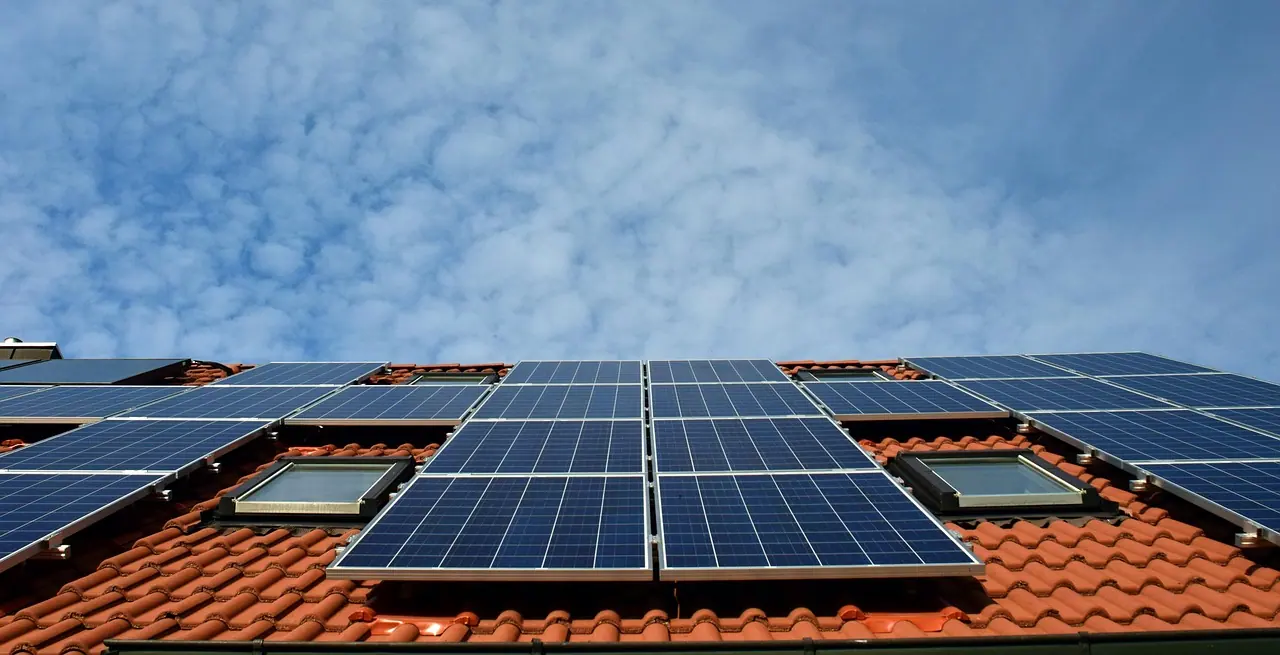
We are running 16 monocrystalline panels rated at 450 watts each, giving us a total array capacity of 7.2 kW. The panels are tier-one, manufactured in Mexico by a company that sources cells from established Asian suppliers but assembles locally. We chose monocrystalline over polycrystalline for the higher efficiency per square meter — on a property where we are trying to minimize the visual and physical footprint of infrastructure, getting more watts from fewer panels matters.
The panels are mounted on a ground-mounted racking system angled at roughly 16 degrees to match our latitude. We considered roof mounting, but our structures use thatched palapa roofing and natural materials that are not designed to bear panel weight or withstand the hardware penetrations that roof mounting requires. Ground mounting also makes cleaning and maintenance far easier, which turns out to be important when you live in a place where dust, pollen, bird droppings, and salt haze accumulate on glass surfaces weekly.
Battery Bank
Our battery bank is 30.7 kWh of usable capacity, built from lithium iron phosphate (LiFePO4) cells. We went with a 48-volt system using server rack-style battery modules, each rated at 5.12 kWh. Six modules total, connected in parallel.
We will get into the lithium versus lead-acid decision in detail below, but the short version is this: in a coastal tropical environment where temperatures routinely exceed 35 degrees Celsius and humidity sits above 80 percent for months at a time, lead-acid batteries degrade fast. Lithium iron phosphate handles heat better, tolerates partial states of charge without sulfation damage, lasts three to four times longer in cycle life, and weighs about a third as much for the same usable capacity. The upfront cost is roughly double, but the lifetime cost is significantly lower.
Inverter
We use a 6 kW hybrid inverter — a split-phase unit that handles both the solar charge control (MPPT) and the DC-to-AC conversion in one box. It is rated for 6,000 watts continuous and can handle brief surges up to 12,000 watts for motor startups. The inverter communicates with the battery management system over CAN bus, which means it can read cell-level voltage and temperature data and adjust charging parameters automatically.
We chose a hybrid inverter rather than separate charge controller and inverter units because it simplified wiring, reduced points of failure, and came from a manufacturer with a service center in Oaxaca city. That last point matters more than most spec sheets will tell you. When something breaks in a remote location and the nearest electrician is an hour away by boat and truck, having a single integrated unit with local warranty support saves real headaches.
What We Can Run — and What We Cannot
Our system comfortably powers everything a guest at Montserrat Reserve needs for a genuinely comfortable stay.
What runs daily without issue:
- LED lighting throughout all structures — we use warm-tone LEDs that consume about 7 to 10 watts each, and the total lighting load across the property is under 300 watts even with everything on
- Ceiling fans and standing fans in every villa and common area — these draw between 35 and 75 watts each depending on speed, and they run most of the day and all night
- A commercial refrigerator and a chest freezer in the kitchen — together these cycle on and off and average about 250 watts continuous
- A water pump that fills our gravity-fed tanks from the well — it runs for about two hours per day and draws around 750 watts while operating
- Phone and device charging stations in common areas
- A small sound system for ambient music in the dining area
- Kitchen appliances including a blender, food processor, and electric kettle
What we do not run on solar:
- Air conditioning — a single mini-split AC unit draws 1,000 to 1,500 watts continuous, and running several of them through the night would drain our battery bank before sunrise. More importantly, our architecture is designed for natural ventilation. Cross breezes, high ceilings, shaded overhangs, and ceiling fans keep the villas comfortable without AC for most of the year. This is a deliberate design philosophy, not a limitation — it is central to the experience we are creating.
- Hair dryers, curling irons, or high-wattage heated appliances — a typical hair dryer draws 1,500 to 1,800 watts, which is a quarter of our inverter capacity for a single device. We let guests know in advance and provide alternatives.
- Electric stoves or ovens — we cook with gas. Solar-powered cooking at this scale would require a much larger system than we have or need.
The key insight is that solar works brilliantly for everything that runs on modest, sustained power. It struggles with anything that converts electricity into heat, because heating elements are enormously power-hungry relative to the work they do.
The Lithium vs. Lead-Acid Decision
This was one of the most expensive choices we made, and we spent weeks going back and forth. Here is the honest comparison from our perspective.
Lead-acid (AGM or gel) advantages: Lower upfront cost, roughly 40 to 50 percent less per kWh of rated capacity. Widely available in Mexico. Familiar technology that any local electrician understands. No battery management system complexity.
Lead-acid disadvantages for our situation: Usable capacity is only about 50 percent of rated capacity — discharge below that and you shorten lifespan dramatically. Cycle life of 500 to 800 cycles at 50 percent depth of discharge, which means replacement every 2 to 3 years in daily cycling. Performance degrades significantly in heat above 30 degrees Celsius. They weigh roughly three times as much as lithium for equivalent usable capacity. They produce hydrogen gas while charging, requiring ventilated enclosures.
LiFePO4 advantages: Usable capacity is 80 to 90 percent of rated capacity. Cycle life of 4,000 to 6,000 cycles at 80 percent depth of discharge — that translates to 10 to 15 years of daily use. Flat discharge curve means consistent voltage until nearly empty. Handles heat better than other lithium chemistries, with a safe operating range up to 45 degrees Celsius. No gassing, no maintenance, no equalization charges.
LiFePO4 disadvantages: Higher upfront cost. Requires a compatible inverter and battery management system. Fewer local suppliers, though this is changing rapidly in Mexico.
We chose LiFePO4 because we ran the numbers over a 10-year horizon. Replacing lead-acid batteries every 2.5 years — including purchase, shipping to a remote coastal location, disposal of the old batteries, and labor — would have cost us more than double the price of the lithium system over the same period. And at the end of 10 years, the lithium batteries would still have usable life remaining while we would be on our fourth or fifth set of lead-acid.
For anyone building in a climate like ours, lithium iron phosphate is not a luxury. It is the economical choice on any timeline longer than three years.
Mounting, Corrosion, and Salt Air
Building anything near the ocean means fighting corrosion constantly. Our property is close enough to the coast that salt-laden air reaches every surface. This affects solar installations in specific ways that inland systems never have to deal with.
Racking and hardware: We use marine-grade aluminum racking with stainless steel fasteners throughout. Standard galvanized steel would corrode visibly within months here. Even with stainless hardware, we apply anti-seize compound to every bolt and inspect quarterly for any signs of crevice corrosion where dissimilar metals meet. The ground-mount posts are set in concrete footings raised above soil level to prevent contact with standing water during rainy season flooding.
Panel frames: Most solar panels use anodized aluminum frames, which hold up reasonably well in salt air. We still rinse the frames with fresh water monthly to prevent salt crystal buildup in the frame channels where it can trap moisture and accelerate pitting.
Wiring and connections: Every cable connection is made with marine-grade tinned copper lugs and sealed with adhesive-lined heat shrink. We learned this the hard way — our first cable runs used standard copper crimp connectors, and within six months we found green corrosion at several junction points that was increasing resistance and causing voltage drops. We replaced every connector on the system. More on that in the mistakes section.
Inverter and battery enclosure: The inverter and batteries live in a ventilated but enclosed structure with a roof and partial walls that block direct rain and salt spray while allowing airflow. We added a small exhaust fan on a thermostat to prevent heat buildup during the hottest months.
Rainy Season Performance
The rainy season — roughly June through October — is when every off-grid solar operator on the Oaxacan coast earns their education. Cloud cover can cut production by 50 to 70 percent on heavy overcast days, and we occasionally get two or three consecutive days of solid cloud and rain where production drops to 20 to 30 percent of rated capacity.
Here is how we handle it.
Oversizing for the worst case: Our 7.2 kW array is larger than we would need if every day were sunny. We deliberately oversized to ensure that even on partially cloudy days, we produce enough to cover our loads and still put energy into the batteries. On a clear dry-season day, our system produces far more than we use, and the charge controller simply throttles back once the batteries are full.
Load management during extended clouds: When the forecast shows multiple days of heavy rain and overcast, we reduce non-essential loads. The kitchen switches to gas for water heating. We run the water pump less frequently and rely on stored tank water. Charging stations in common areas get turned off overnight. These adjustments are minor and guests barely notice them — they are part of the rhythm of living in tune with the weather, which is part of our broader approach to sustainability.
Backup generator: We have a small propane generator rated at 3.5 kW that we can run to supplement the batteries during extended cloudy periods. We use it maybe 10 to 15 days per year, usually for a few hours in the late afternoon when battery state of charge drops below 30 percent. It is not elegant, and we do not love it, but it is honest — fully off-grid solar in a tropical climate with a genuine rainy season needs a backup plan. Anyone who tells you otherwise is either in a drier climate or not being straight with you.
Maintenance Schedule
Solar is often marketed as maintenance-free. It is not. It is low-maintenance compared to a diesel generator, but in our environment, regular attention is non-negotiable.
Weekly: Visual inspection of panels for debris, bird nests, or damage. Check inverter display for error codes or unusual readings.
Monthly: Clean panel surfaces with soft brush and fresh water — no soap, no pressure washers. Rinse panel frames and racking with fresh water to remove salt deposits. Check battery state of health readings from the BMS app. Inspect visible wiring for any signs of damage, chewing by rodents, or insect nests in conduit.
Quarterly: Torque check on all racking bolts and electrical connections. Clean inverter air intake filters. Check grounding system continuity. Inspect concrete footings for erosion or settling. Review production data logs for any trend of declining output that might indicate a degrading panel or connection issue.
Annually: Full electrical inspection by a certified solar technician from Oaxaca city. Thermal imaging of panel connections and combiner box to detect hot spots. Battery capacity test. Inverter firmware update if available.
This schedule takes about 30 minutes per week for the routine checks and about half a day for the quarterly deep inspection. It is real work, but it is the kind of work that prevents small problems from becoming system failures in a place where getting replacement parts takes days, not hours.
Total Cost and ROI
We are not going to give a single precise number because component prices in Mexico shift frequently and shipping costs to remote locations vary wildly. But here is a realistic range based on what we have spent.
Total system cost (panels, batteries, inverter, racking, wiring, enclosure, installation): Between 380,000 and 450,000 MXN, which at current exchange rates falls in the range of 22,000 to 26,000 USD. This does not include the backup generator, which was another 15,000 MXN.
What would grid connection have cost? The quotes we received for running utility power to our location ranged from 500,000 to over 700,000 MXN — and that was just the infrastructure cost, before paying monthly electricity bills. The grid option was more expensive before we even turned on a light.
ROI timeline: Comparing against what we would have spent on diesel generation — which was our only other realistic option — the solar system pays for itself in roughly 4 to 5 years through fuel savings alone. After that, our marginal cost of electricity is effectively zero except for maintenance supplies and the occasional generator propane fill during rainy season. Over the expected 15-year lifespan of the panels and 10-plus-year lifespan of the batteries, the total cost of energy is a fraction of what any fossil-fuel alternative would have been.
Mistakes We Made
We are sharing these because they cost us time and money and they are avoidable.
Undersizing the initial system. Our first installation was a 3.6 kW array with 15 kWh of battery storage. We designed it based on a conservative estimate of what the retreat would need — and we were wrong. We underestimated how much energy the water pump would use, forgot to account for parasitic loads from the inverter itself (which draws about 50 watts just being on), and did not adequately plan for the energy overhead of running a kitchen that serves multiple guests. Within four months we were running the backup generator almost every night. We ended up doubling the system, which meant buying additional panels, batteries, and a larger inverter, plus rewiring the combiner box and upgrading the main disconnect. Doing it right the first time would have saved us roughly 60,000 MXN in redundant equipment and labor.
Cable gauge mistakes. Our first cable runs from the panel array to the inverter used 10 AWG wire because that is what the initial installer had on hand and it technically met code for the original smaller system. When we doubled the array, we needed to run higher current through the same cable trays, and the voltage drop became significant — we were losing 5 to 7 percent of our production just in cable resistance. We replaced all DC main runs with 6 AWG, and in some longer runs we went to 4 AWG. The lesson: always size cables for the system you might build, not just the system you are building today. Copper is expensive, but less expensive than ripping out and replacing an entire cable run.
Using non-marine connectors. Covered above in the corrosion section, but worth repeating. Standard MC4 connectors and copper crimp lugs started corroding within months. We replaced everything with marine-grade tinned copper and sealed connections. This added about 8,000 MXN to the project but eliminated a recurring source of resistance-related losses and potential fire hazard.
Not building the battery enclosure with enough airflow. Our first enclosure was too tight, and during the hottest months the interior temperature climbed above 40 degrees Celsius. The BMS started throttling charge rates to protect the cells, which meant we were not fully charging during the hours of peak production. Adding ventilation louvers and a thermostat-controlled exhaust fan solved the problem, but we should have designed for thermal management from the beginning.
Suppliers in Mexico
The solar market in Mexico has matured significantly in the past few years. Here is what we have learned about sourcing.
Panels: Several Mexican companies assemble panels domestically, and the quality of tier-one Mexican-assembled panels is comparable to imports. Buying locally reduces shipping costs and provides easier warranty access. We sourced through a distributor in Oaxaca city who stocks multiple brands and can deliver to the coast.
Batteries: LiFePO4 batteries are increasingly available from Mexican distributors. Prices have come down substantially as demand has grown. We bought our battery modules through a renewable energy supplier in Mexico City who ships nationwide. Check that any battery you buy comes with a compatible BMS and that the communication protocol (CAN bus or RS485) matches your inverter.
Inverters: The major international brands all have distribution in Mexico, and several have service centers in major cities. We prioritized having a service center within a day’s travel of our location, which narrowed our choices but gave us peace of mind.
Installation labor: We worked with a certified solar installer from Puerto Escondido who had experience with off-grid systems. This is important — most solar installers in Mexico focus on grid-tied residential systems, which are a completely different design challenge. Make sure whoever you hire has specific off-grid experience and understands battery-based system design.
General advice: Get at least three quotes. Specify exactly what you want rather than letting the installer design the system — you will get better pricing and avoid being upsold on equipment you do not need. And always visit the supplier’s other installations if possible. Seeing a system that has been running for two or three years in a similar climate tells you more than any spec sheet.
What We Would Do Differently
If we were starting from scratch today, we would size the system at 150 percent of our calculated need from day one. We would use marine-grade everything from the first bolt to the last connector. We would build the battery enclosure with active cooling designed in from the start. And we would run all cable in oversized conduit with pull strings so that future upgrades do not require tearing out infrastructure.
Solar power has been one of the best decisions we have made in building Montserrat Reserve. It is not magic and it is not maintenance-free, but it works — reliably, quietly, and in harmony with the landscape and climate that drew us here in the first place. The sun is the most abundant resource on the Oaxacan coast, and learning to build around it has shaped not just our energy system but our entire philosophy of what this place should be.