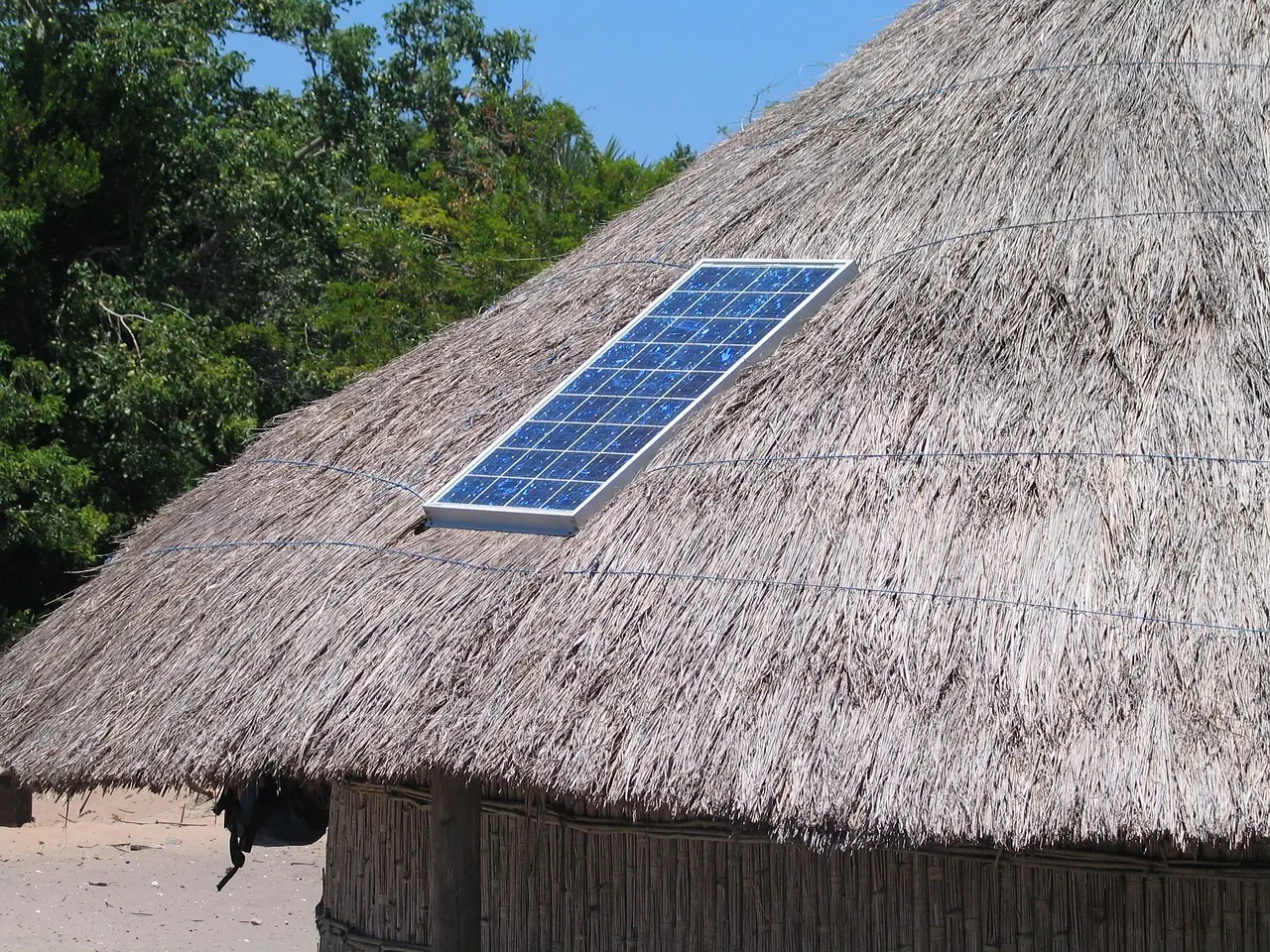
People romanticize off-grid living until they have to do it. Then they either leave within a week or they stay and it changes them in ways they did not expect. We have been living and building on the Oaxaca coast for long enough now to speak honestly about both sides. Off-grid living in Oaxaca is not what most people imagine — it is harder in some ways, easier in others, and different from the fantasy in almost every respect. This is what it actually looks like, day to day, stripped of the Instagram filter.
What a Typical Day Looks Like
You wake up with the sun. Not because you are disciplined, but because the sun on a tropical coast does not give you a choice. By 6:00 a.m. the light is strong enough to fill the room through any gap in the curtain, and the birds are already loud — parrots, oropendolas, chachalacas screaming from the canopy like small dinosaurs. There is no alarm clock in this life, and after a few weeks you stop missing one.
The morning routine is shaped by what you do not have. There is no scrolling through a phone for twenty minutes in bed because the phone either has no signal or has been dead since yesterday afternoon. You get up. You stretch, or you walk outside and stand barefoot on the ground for a few minutes while the coffee water heats on the stove. The first hour of the day belongs entirely to you, every single day, and this turns out to be one of the most significant changes.
Mornings are for the essential tasks. Checking the water levels. Looking at the garden — what needs harvesting, what needs watering, whether anything got into the lettuce overnight. Feeding the compost. These things sound like chores when you describe them, but in practice they become a kind of moving meditation. You are doing something physical, purposeful, and quiet while the world is still cool.
The heat of the day, roughly from noon to three, is for rest. This is not laziness — it is how people have lived on this coast for centuries. You read. You nap. You repair something. You sit in the shade and talk. The idea of powering through the hottest hours with air conditioning and fluorescent lights is a luxury of the grid, and once you stop fighting the heat and start working around it, your energy levels stabilize in ways that surprised us.
Late afternoons are for whatever the day demands — building, cleaning, a walk to the beach, a swim in the lagoon. Dinner happens early, while there is still light to cook by or shortly after the solar-powered lights come on. Evenings are short and quiet. You are in bed by nine most nights, not because there is nothing to do but because your body has genuinely synchronized with the cycle of the sun.
Water: The Thing You Think About Most
Nothing teaches you the value of water like living without a municipal supply. On the Oaxaca coast, we depend on a combination of rainwater collection, well water, and conscious management. During the rainy season — roughly June through October — the sky delivers more water than you can store. During the dry months, every liter matters.
You learn to take short showers, and you learn fast. You learn to wash dishes in a basin rather than under a running tap. You learn that a five-gallon bucket of water, used carefully, can accomplish more than you thought possible. Greywater from the kitchen and shower gets filtered and directed to the garden rather than wasted. Nothing goes down a drain and disappears — there is no “away” here.
This is not deprivation. It is attention. Most people in grid-connected cities use 80 to 100 gallons of water per day without thinking about it. Here, we use a fraction of that, and nothing essential is missing. You still bathe. You still cook. You still drink clean water. You just stop treating it as infinite, and that shift in awareness carries over into everything else. Our sustainability practices were designed around this reality — working with what the environment provides rather than importing resources from somewhere else.
Food Without Constant Refrigeration
This was one of our biggest adjustments. Modern life revolves around the refrigerator — you buy food for the week, store it, and eat on your schedule. Off-grid, particularly with limited solar capacity, refrigeration is either unreliable or nonexistent. That changes your entire relationship with food.
You eat what is fresh. You buy or harvest what you will eat today and tomorrow, not next Thursday. Market days become important — the trip to the nearest town for produce, eggs, and fish is not an errand but a rhythm that structures the week. You learn which foods keep without refrigeration (root vegetables, citrus, dried beans, rice, onions, garlic, hard cheese, cured meats) and which do not (leafy greens need to be eaten the day you pick them, meat needs to be cooked the day you buy it or preserved immediately).
Preservation becomes a practical skill rather than a hobby. We salt fish, dry herbs, ferment vegetables, and make salsas that last for days in the shade. Growing your own food is not a lifestyle accessory here — it is a genuine source of nutrition. The garden produces papaya, banana, herbs, chiles, tomatoes, greens, and squash at different times of the year. You eat seasonally because there is no other option, and the food tastes better for it.
The surprise is that meals become more interesting, not less. When you cannot rely on a stocked fridge and a delivery app, you actually cook. You improvise. You combine what you have in ways you would not have tried if you had unlimited options. Constraints, it turns out, are good for creativity — in the kitchen and everywhere else. You can read more about our approach to growing food on the experience page, where this philosophy extends to how guests eat during their stay.
Communication and Your Relationship with Information
Limited internet access is the change that people fear most and appreciate fastest. On the coast where we live, connectivity ranges from sporadic to nonexistent. There is no doom-scrolling at midnight. There is no checking email every ten minutes. There is no algorithm feeding you content designed to keep you agitated and engaged.
What replaces it is silence — the informational kind. Your brain stops receiving hundreds of inputs per day and starts processing the ones it already has. Ideas you have been carrying around half-formed suddenly develop. Problems that seemed complex when you were juggling twelve tabs simplify when you can only think about one thing at a time.
Communication becomes intentional. When you can send a message, you send one that matters. You stop performing for an audience. You stop tracking what other people are doing. Your world shrinks to the people in front of you and the place you are standing in, and that contraction, which sounds like it should feel limiting, actually feels like relief.
This does not mean isolation. It means choosing when and how you connect rather than being connected by default. When we do get online — usually during a trip to town or on the occasional evening when the satellite connection cooperates — we handle what needs handling and then close the laptop. The compulsive pull fades faster than you expect, usually within the first two weeks.
Social Life: The Isolation Myth
People assume that off-grid living on a remote coast must be lonely. The opposite is true, though the social life is different from what most people are used to.
In a small community, you know your neighbors. Not in the wave-from-the-driveway sense, but in the bring-you-fish-when-they-had-a-good-catch sense. Social interaction here is face-to-face, unhurried, and often spontaneous. Someone stops by in the afternoon. You share a meal. A conversation lasts two hours because nobody has somewhere else to be. The quality of social connection is higher precisely because the quantity is lower.
There is also a rotating cast of travelers, surfers, and curious people who find their way to this part of the coast. Conversations with strangers are richer when nobody is performing a curated version of their life — when you are just two people sitting on a beach or sharing a meal by lamplight.
The loneliness, when it comes, is real but different from urban loneliness. In a city, you can feel lonely surrounded by millions of people because the connections are shallow. Here, you might miss a specific person or a specific place, but you rarely feel the ambient loneliness that comes from being surrounded by people who do not see you. The community is small, but it is genuine.
The Adjustment Period
The first week is the hardest. This is true for almost everyone, regardless of how prepared they think they are.
Your body is adjusting to the heat, the insects, the unfamiliar sounds at night. Your mind is adjusting to the absence of stimulation. There is a restlessness that settles in around day three — a low-grade anxiety that has nothing to do with danger and everything to do with the sudden absence of distraction. You reach for your phone and it is not there, or it is there but it does nothing. You think about work you are not doing, people you are not texting, content you are not consuming.
By the end of the first week, the restlessness begins to break. By the second week, it is largely gone. What replaces it is hard to describe — a kind of spaciousness in your thinking, a slower internal clock, an ability to sit with nothing happening and not feel like something is wrong.
What you miss: reliable hot showers, certain foods, the convenience of ordering anything and having it appear at your door, specific people, live music, bookstores. What you do not miss, and this part surprises most people: the news cycle, the noise, the pressure to be productive every waking hour, traffic, artificial light, the feeling that you should be doing something else no matter what you are doing.
Physical Health Changes
Your body changes faster than your mind when you go off-grid. Within the first month, several things happen almost universally.
Sleep improves dramatically. Without screens before bed, without artificial light after dark, and with genuine physical tiredness from the day’s activity, you fall asleep faster and sleep more deeply. Most people we know who have made this transition report sleeping seven to nine hours consistently, waking without an alarm, and feeling genuinely rested — something many had not experienced in years.
You move more. Not through exercise routines — those tend to fade when the gym disappears — but through the basic activities of living. Walking to the water. Carrying things. Building and repairing. Gardening. Swimming. The movement is functional, varied, and distributed throughout the day rather than compressed into a single hour at the gym followed by twelve hours of sitting.
Sun exposure, managed sensibly, improves vitamin D levels, mood, and circadian regulation. The Oaxacan coast delivers intense sun, so learning to work around it — shade in the middle of the day, early morning and late afternoon for outdoor activity — is essential. But the overall effect of being outside for most of the day, in natural light, is a marked improvement in energy and mood that is hard to replicate in an indoor life.
You eat less processed food by default, because processed food is not available. The dietary shift — more fresh vegetables, more fish, more beans and rice, fewer packaged snacks and refined sugar — produces changes in digestion, energy, and body composition that people notice within weeks.
Mental Health: Boredom as a Feature
This is the part people struggle to believe until they live it. The mental health benefits of off-grid living are not subtle. They are profound, and they begin with boredom.
Boredom has become the modern world’s most avoided state. Every app, every platform, every notification system is designed to eliminate it. But boredom is where creativity lives. When your brain has nothing to consume, it starts to produce. Ideas arrive. Old memories surface. You start drawing, or writing, or building something you had been thinking about for years but never had the mental space to begin.
The clarity that comes from reduced stimulation is startling. Decisions that felt overwhelming in a connected environment become simple when you can think about them without interruption. Priorities rearrange themselves. The things you thought mattered — the inbox, the metrics, the social media numbers — shrink to their actual size, which turns out to be very small. The things that actually matter — your health, your relationships, your sense of purpose, the quality of your daily experience — expand to fill the space.
This is not unique to us. Nearly every guest who spends time at Montserrat Reserve reports some version of this shift, even after just a few days. The setting does much of the work — when the landscape is beautiful and the pace is slow, your nervous system downregulates on its own. You do not need a meditation app. You need a hammock and a view of the lagoon.
Anxiety does not disappear entirely. But its character changes. Instead of the chronic, ambient anxiety of modern connected life — the feeling that you are always behind, always missing something, always failing to keep up — what remains is the occasional, specific anxiety of a real problem that needs solving. That kind of anxiety is useful. The other kind is just noise.
The Financial Reality
Off-grid living in Oaxaca is cheaper than most urban lifestyles, but not in the way people expect.
Your fixed costs drop dramatically. There is no electricity bill, no gas bill, no water bill, no streaming subscriptions, no gym membership. Rent, if you are renting, is a fraction of what you would pay in any North American or European city. Food costs less because you are growing some of it and buying the rest at local markets rather than supermarkets.
But the spending shifts rather than simply disappearing. Tools and materials for maintaining an off-grid property cost money. Solar equipment needs replacing periodically. Transportation to town for supplies involves fuel. Medical care, while affordable in Mexico, requires planning and sometimes travel. When something breaks, you either fix it yourself or pay someone local — there is no calling a corporate service line.
The net effect, in our experience, is that you spend roughly one-third to one-half of what you would spend in a mid-sized North American city, but the spending is more visible and more intentional. You know exactly where every peso goes because there are no automatic charges, no subscriptions silently renewing, no impulse purchases enabled by one-click ordering.
The deeper financial reality is that this lifestyle requires a different relationship with money. You need less of it, but you also earn less of it — unless you have remote work that survives the connectivity limitations. Most people who live this way long-term have either saved enough to cover a period of low income, have location-independent work, or have built something locally that generates modest revenue. It is not a path to wealth. It is a path to sufficiency, which turns out to feel like more than enough.
Who This Lifestyle Is For and Who It Is Not
Honesty matters here more than marketing. Off-grid living on the Oaxaca coast is not for everyone, and pretending otherwise does no one any favors.
It is for people who are genuinely curious about living with less and are willing to be uncomfortable during the transition. It is for people who find more satisfaction in a meal they grew and cooked themselves than in a restaurant meal someone else prepared. It is for people who can sit with silence and not interpret it as emptiness. It is for people who want to know where their water comes from, where their waste goes, and what the weather is doing — not as abstract concepts but as daily realities that shape how they live.
It is not for people who need constant stimulation or reliable connectivity for their mental well-being. It is not for people who experience genuine distress without modern medical infrastructure nearby. It is not for people who are running away from problems that will follow them regardless of location — off-grid living amplifies what you bring with you, including unresolved difficulties. And it is not for people who want the aesthetic of simplicity without the actual friction of it.
The best test is a short stay before a long commitment. Come to this coast for a week or two. Stay somewhere that operates the way we do — solar power, rainwater, limited connectivity, food from the garden and the market. See how you feel on day three, when the restlessness peaks. See how you feel on day ten, when it breaks. If what replaces it feels like something you want more of, then this might be your life. If it does not, that is equally valid — you will return home with a better understanding of what you actually need.
To learn more about who we are and how we came to this way of living, visit our about page. And if you want to experience a version of it without a permanent commitment, Montserrat Reserve exists precisely for that — a place where you can test the edges of your comfort zone and see what is on the other side.